
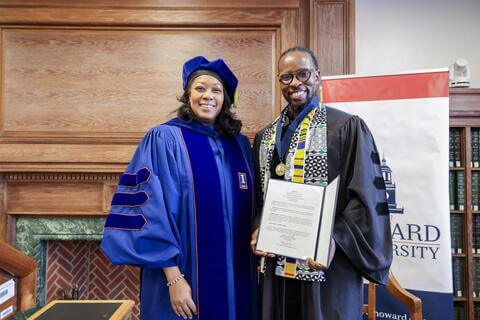
Meet the scholars and staff building the Institute from the ground up.
About the Howard University Institute for Advanced Study
Fostering the Advanced Study of Racism.
Today, the world is reeling from racism. It is directly or indirectly harming all racial groups in various sectors of society. Dividing and devastating humanity, racism is an existential threat to human survival like climate change, war, and pandemics. A societal problem of this magnitude must be meticulously studied in all its history, complexity, and variety. Research findings, facts, data, and stories must be widely circulated in accessible language, so power can be built. Reparative solutions must be evidence-based and practical. Implemented solutions must be rigorously audited for efficacy. All this advanced study is foundational to societal change.
But advanced study is no solo exercise. It requires a community where experts can engage in careful inquiry, can defy conventional thought, can innovate with each other, can teach each other, can refine each other’s work, can present their work to the public. This community is being built at the Howard University Institute for Advanced Study.
We are grounding our work in:
Evidence. Moving racial discourse away from common misconceptions and simplistic propaganda toward verifiable facts and nuanced truths.
Expertise. Ensuring the public is learning about racism from actual experts with training and bodies of work in various fields and disciplines.
Experience. Platforming those with lived experience enduring and confronting different forms of racism.
Empathy. Understanding the racial ideas and feelings of all peoples—and their origin stories—to build antiracist bridges, courageous connections, and multiracial solidarity.
Hope Grounded in History
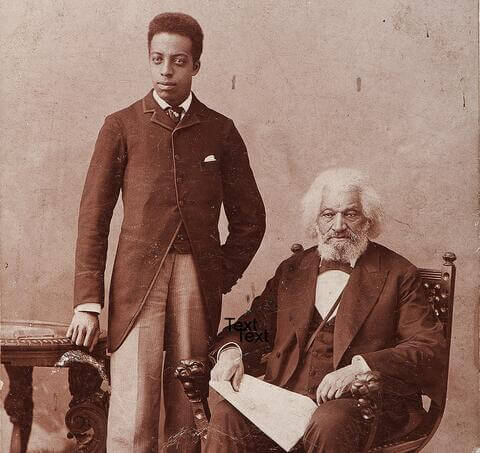
The Institute for Advanced Study is well-positioned to continue the rich intellectual history of Howard University. For more than a century, Howard has been home to the finest interdisciplinary collection of scholars and students studying and challenging racism in the world. A century ago, philosopher Alain Locke captured the antiracist “New Negro” sentiment—an awakening exhibited in the work of his mentee, novelist and scholar Zora Neale Hurston (A.A. ‘20). Law school deans Charles Hamilton Houston and William Hastie—and their students, including Thurgood Marshall (J.D. ‘33)—developed and executed the NAACP’s legal strategy against segregation.
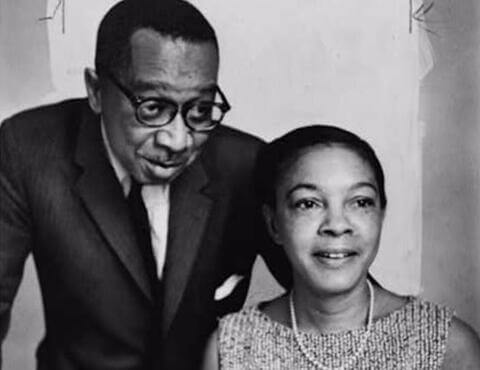
Physician and anthropologist William Montague Cobb (M.D. ‘29) pioneered health disparities research. Francis Cecil Sumner, known as the “Father of Black Psychology,” supervised the original “doll test” of Howard students Mamie Clark (B.S. ‘38 and M.A. ‘39) and Kenneth Clark (B.S. ‘35) that the U.S. Supreme Court cited in ruling segregation unconstitutional.
Howard students like Gloria Richardson (B.A. ‘42) and Pauli Murray (J.D. ‘44) staged someof the earliest sit-ins of the civil rights movement before becoming human rights icons. Howard Thurman and Benjamin Mays were early activist theologians at Howard before moving on to new colleges where they mentored Martin Luther King, Jr.
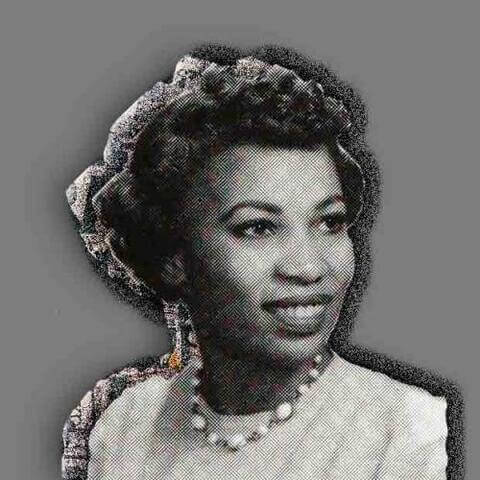
Historian Rayford Logan documented the history of racism. Professor Charles T. Thompson led the charge for educational equity. Political scientist Eric Williams and the father of African Studies, William Leo Hansberry, were hugely influential in decolonization movements in the Global South. Toni Morrison (B.A. ‘53), who explored racism in her novels, began her professional writing career as a Howard literature professor.
Students like Muriel Tillinghast (B.A. ‘64) and Kwame Toure (B.A. ‘64) were centrally involved in SNCC before trailblazing a Black power movement that inspired similar empowerment movements among Native Americans, Latino Americans, and Asian Americans. Professor Nathan Hare helped students in the Black Campus Movement to trailblaze the antiracist discipline of Black Studies. Sociologist Joyce Ladner became one of the first scholars to document the intersection of race, gender, and class. Benjamin F. Chavis Jr. (D.Min. ‘81) emerged as the godfather of the environmental justice movement.
We are constantly inspired by the long and storied history of Howard professors, students, and alums. If they can forge change against unimaginable odds, then so can we.
We remain hopeful like those abolitionists who founded Howard University in 1867 and steered the university through its formative years. Abolitionists like Frederick Douglass, a member of the Board of Trustees from 1871 until his death in 1895.